September 29, 2026
What is really in your portfolio? Morningstar classification in FundStat
How Morningstar organises sectors, industries, and regions — and how one Saudi Arabia ETF illustrates the difference between business exposure and listing country in FundStat.
A portfolio with twenty positions can still depend heavily on one part of the economy. Different tickers, brokers, and trading currencies do not necessarily mean different underlying businesses. A broad ETF can also add exposure to sectors you already own through individual shares.
Morningstar is an investment research and data company. Its business classification groups companies by what they do, while its regional framework groups countries. Together, they help describe both the economic and geographic composition of a portfolio.
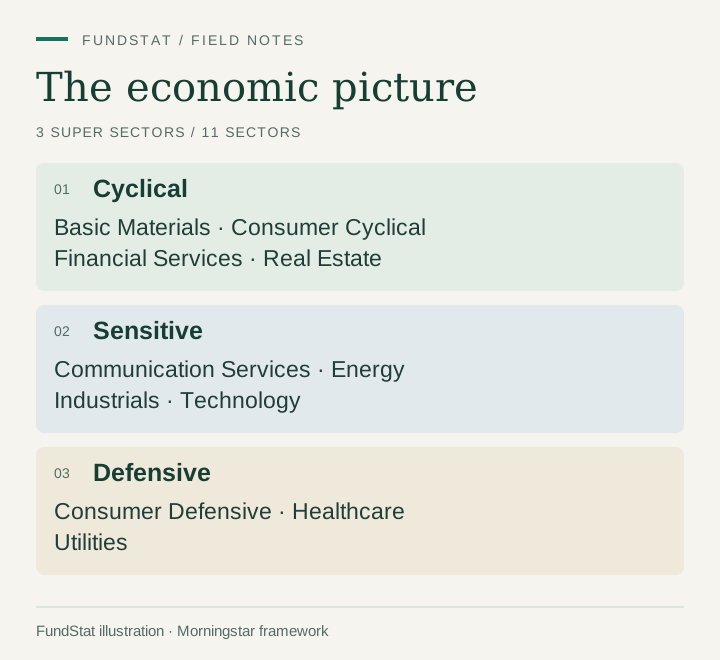
The February 2026 Morningstar Global Entity Classification Structure contains 11 sectors and 156 industries. A sector gives a broad view of a business; an industry adds detail. Regions provide a separate geographic perspective.
Three questions, three views
Each view answers a different question about the positions you hold:
- Sectors: which broad parts of the economy account for my portfolio?
- Industries: which more specific business activities sit inside those sectors?
- Regions: how is my equity exposure distributed across groups of countries?
How Morningstar classification works
Start with the broad sectors, look at the industries within them, then add geography.
01 / Sectors
02 / Industries
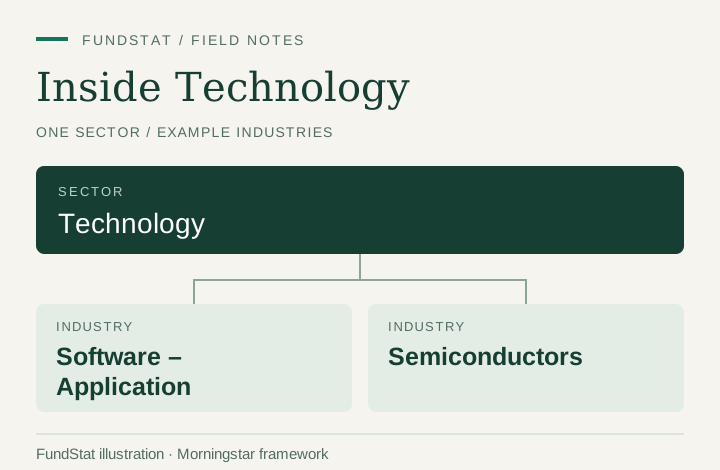
- A business using an app or a website does not automatically belong to Technology. What the business actually sells matters more than the channel it uses to reach customers.
03 / Regions
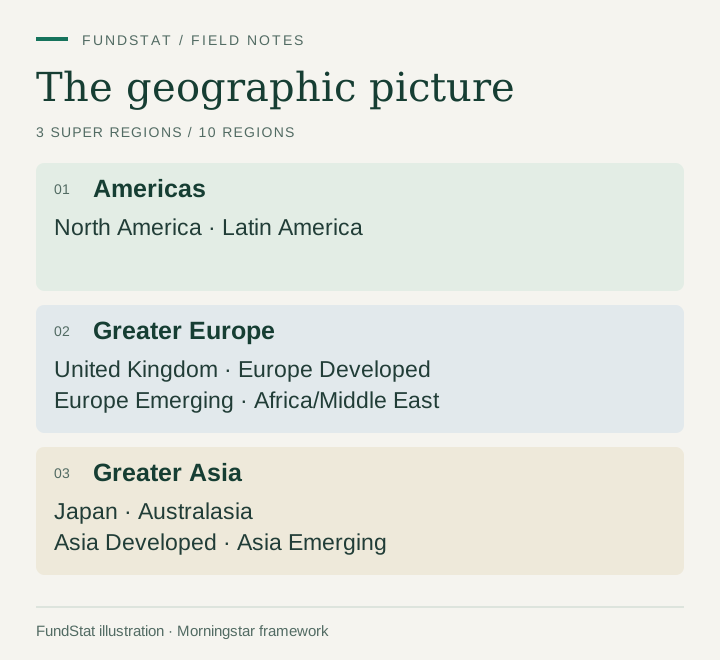
- A company’s region describes its geographic classification. It does not show where all its customers or revenue are located.
Morningstar in FundStat: one ETF, three perspectives
FundStat uses this taxonomy to classify companies and show the available sector and regional allocations of ETF equity holdings. Take IKSA on the London Stock Exchange: iShares MSCI Saudi Arabia Capped UCITS ETF USD (Acc). It trades in US dollars in London and provides exposure to Saudi Arabian equities.
01 / Sectors
- Each sector contributes to the whole portfolio in proportion to the value invested in the ETF. If IKSA represented half of a portfolio, its 47.6% Financial Services allocation would contribute about 23.8% to that portfolio.
- Industries works differently: ETFs stay in their own category there. The detailed industry view applies to individually classified share positions.
02 / Listing countries
- This view answers where the instrument is listed. The location of its underlying investments is shown in Regions.
03 / Regions
- Saudi Arabia is part of the combined Africa/Middle East region. The highlighted map represents that whole category; it does not mean IKSA invests in every highlighted country.
What the three views tell you
IKSA brings together several Saudi business sectors through a listing in London. Reading the views together shows both the instrument you own and the exposure inside it.
- Sectors shows the economic activities behind the ETF.
- Listing countries shows the market where your chosen listing trades.
- Regions shows the geographic allocation of its equity holdings.
- Morningstar: Global Entity Classification Structure, February 2026 (methodology and sector hierarchy)
- Morningstar: original Regions methodology, 2004
- iShares: IKSA fund details and exchange listings
Explore your own breakdown in the FundStat dashboard.